QA Issue 2
Why Kanban is so Appealing as the Ideal Development Methodology
In the search for the right way to build software, I’ve explored structured approaches like Waterfall, Agile, and Scrum. But there’s another methodology that strongly appeals to me: Kanban.
What is Kanban?
Kanban is a lean, visual workflow management method originally developed in manufacturing and later adapted for software development. It focuses on visualizing work, allowing developers to assign work to themselves-progressing in their own timeline, limiting the overall work in progress (WIP), and maximizing flow efficiency. Plus there's an emphasis in testing early and documentation!
Instead of fixed sprints or rigid phases, Kanban uses a board (physical or digital in tools like Jira, Trello, or Azure DevOps) with columns representing stages such as: Backlog → To Do → In Progress → Code Review → QA Testing → Done.
Work items (features, bugs, tasks) are represented as cards that move across the board. It’s literally the digital version of organized sticky notes on a wall — clear, transparent, and easy to understand at a glance. As soon as feature, updates, or bugs are approved, they appear on the board, ready for a developer to self assign. Again, platforms like Jira set up to help teams using Kanban to really thrive!
Why Kanban Appeals to Me
I’m drawn to Kanban because of its highly visual nature. I love being able to see the entire project flow in one view— what’s blocked, what’s moving, and where attention is needed (big picture with all the details organized). This visual clarity reduces confusion and helps the whole team stay aligned.
Here’s what makes it especially appealing:
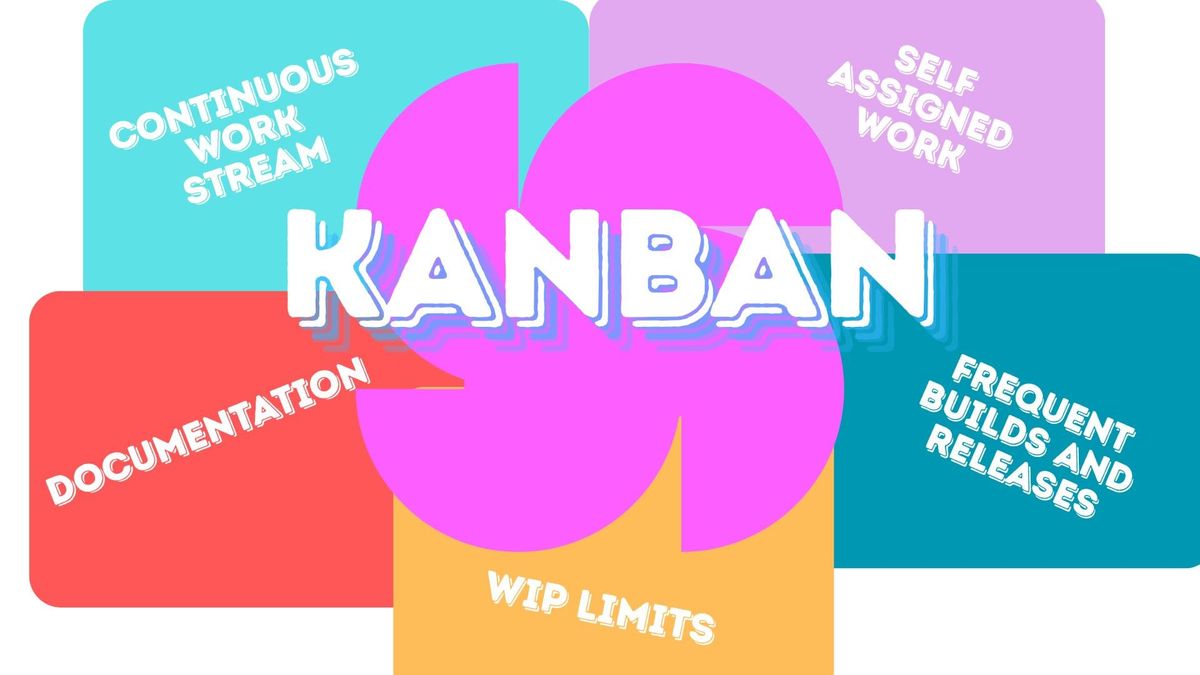
- Continuous Work Stream: As soon as new feature, update, or bug is approved, it's placed on the board ready for a developer to take. There isn't a meeting to decide what to pull from "Backlog" and put in the sprint, as enhancement opportunities and issues come up, they are placed on the communal board ready for someone to take action right away. Tasks can be worked on as soon as someone has capacity.
- WIP (work-in-progress) limits: In order to keep balance and level headedness, there are limits on how many issues can set in each column or phase of the development cycle board. When the limit is reached in Jira, the column turns red, signaling the team that this phase needs attention.
- Early Testing & Quality Focus: Kanban encourages testing early and often. Bugs and design flaws are caught sooner rather than later, which saves significant time and frustration. This pays out well when QA engineers and developers work closely together on new features, updates, and bug fixes. Rather than a developer submitting his work for review and testing, waiting to hear back, these two work in real time to hash it out faster and more efficiently.
- Frequent Building & Releases: The team builds and ships incrementally. Once a task is complete and passes QA, it can be released without waiting for a sprint to end. This is a more natural way to release, release when actually ready. Rather than "it has to be done by this date", developers are placed in an culture where they push themselves to get it done as best they can and as fast as they can.
- Documentation & Knowledge Sharing: Strong emphasis is placed on code reviews, documenting processes, and sharing knowledge across the team. Great documentation leads to great success. You can't improve based on what you don't know, can't remember, or didn't write down. And the better the documentation, the better your team can be empowered with the knowledge it takes to do their job and push limits. Plus Agentic AI needs great documentation, need I say more.
- The Pull System: Instead of a manager assigning tasks, developers pull work themselves based on priority and capacity. This prevents bottlenecks and ensures people only take on what they can handle right now. It also puts the pressure of work more evenly on everyone, rather one person "assigning that pressure".
- Higher Motivation & Happiness: People tend to be more motivated and efficient when they choose their next task rather than having it assigned. This creates a more positive, empowered work environment and higher overall output. While this doesn't work for all personalities or teams, companies that build a community of people who want to work this way and are allowed to work this way tend to be more creative, boundary breaking, and inventive.
Long-Term Thinking and Excellence
Kanban really resonates with my personality as a long-term/ big picture thinker. Things are laid out visually in a software like Jira for everyone to see. It also promotes thoroughly vetting features early on— exploring multiple solutions, ruling out bad assumptions, and avoiding premature commitment to a design or architecture.
I believe if something isn’t built for long-term success or can’t be done with real excellence, it’s often not worth doing. Short-term wins should be reserved for true emergencies.
The point is to have a clear goal with clear objectives and then let developers and QA testers tackle things at their own pace and really own what they are doing. Collecting and implementing feedback shortly after the release enables teams to quickly improve, raising the bar of excellence more and more.
Self-Organized Teams and Entrepreneurship
This methodology leans heavily on self-organized teams with strong developer leaders. This is unconventional for many companies and teams. In a world and culture with standards, deadlines, and policies, this seems "out of left field" for many. To do this, first, companies fill their employee base with people that thrive in a "go getter" and take charge workspace. Then, everyone is given the expertise, tools, and resources needed — including agentic AI with access to all the code, platforms, and software tools in order to get the most help from AI (with proper guidelines and safety constraints of course).
Employees and agents having all the right access is key these days. Just like a custom carpenter is only as good as his tools, an employee is only as good as the tools that their agent has access to. If needed, employees can be given prompt guidelines and guidance to get the most out of their agent.
In Kanban there are no standard sprints or cut off times for when things need to be done. Developers work on a task or bug until it’s truly done, then roll it out after QA testing. It’s less about putting processes and rules around people and more about hiring highly self-motivated, curious, hard-working, and team-oriented individuals who naturally take ownership. This freedom and control is an energizer. People feel empowered, that they have choices and space to work, which leads to harder, smarter, and happier worklife.
Not One-Size-Fits-All, But Powerful When It Fits
Kanban isn’t perfect for every team or company. Larger organizations with heavy compliance needs, security constraints, or junior-heavy teams may require more structure. Some people simply prefer the predictability of sprints and clear deadlines.
However, Kanban beautifully embodies the early entrepreneurial spirit that built many of America’s most successful companies. NASA, Disney, Apple, and many others started with teams of people who had a vision, materialized it, and hired people to "get it done" as best and as fast as they could. They did whatever it took without formal or standardized business workflows. They hired smart, curious, and self driven individuals who were given the freedom and power to accomplish what was needed. Although these companies don't operate that way now (mostly), that initial mentality was so potent that it still lingers in the air inspiring future generations. When you have a team that shares the same vision, is willing to do whatever it takes, and feels the lateral and real ownership, work stops feeling like a grind. It becomes an exciting journey toward building something people will genuinely benefit from and enjoy for years to come.
At its core, Kanban is about displaying the path for all to see and understand, allowing everyone to step up and take work on their initiative, and continuously optimizing each part of the process as a team. They strategize, test early, don't bite off more than they can chew, and document as much as possible along the way. All together this development methodology is incredibly powerful.
Kanban (or a hybrid of Kanban with other development methodologies) describes the work environment that I thrive in and the kind of motivated, high-ownership culture I love to be a part of.