QA Issue 1
Why I'd Choose a Hybrid Waterfall-Scrum Methodology for Software Development
In the world of software development, the pressure to choose a right development methodologies, such as Waterfall, Scrum, or Agile (or choosing a hybrid) often feels like choosing which mountain to climb. It takes a tremendous amount of planning, effort, and whichever you choose will seemingly define your journey for a long time as you try to accomplish achieving something great. I’ve concluded that the strongest approach is a deliberate hybrid or Waterfall for strategic planning and structure, combined with Scrum for execution, iteration, and team collaboration. If I were leading development of a new product, this is exactly the methodology I would use.
The Strengths of Waterfall: Vision, Documentation, and Clear Stages
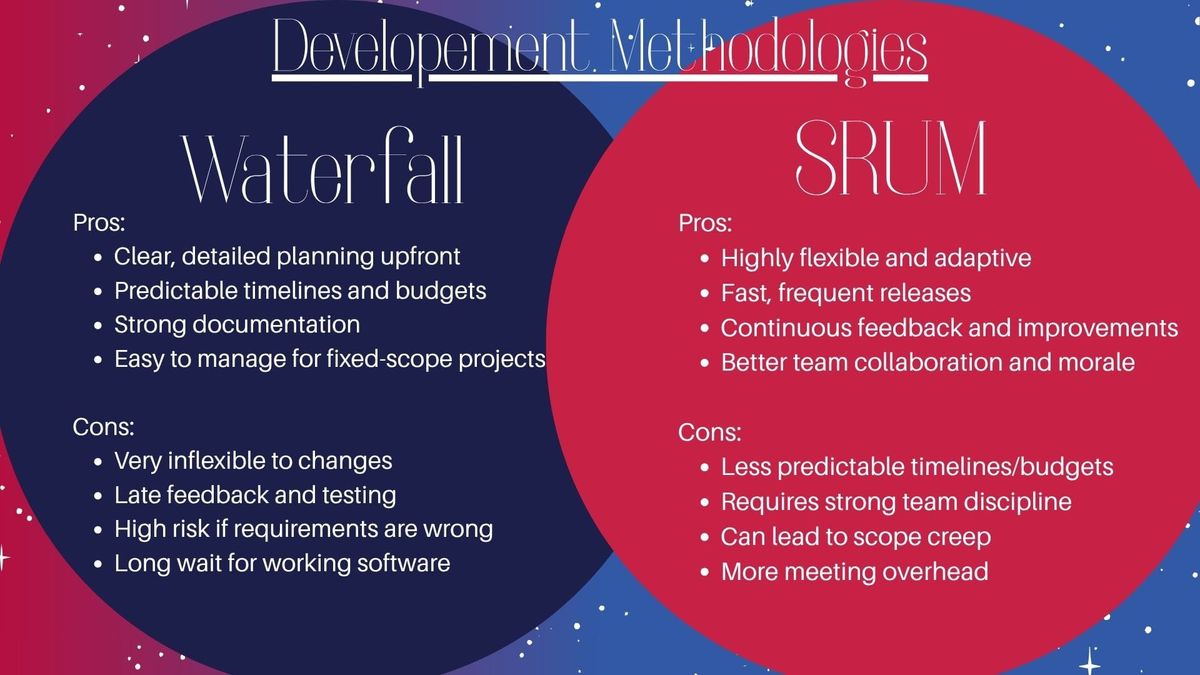
Waterfall provides the essential foundation. It ensures the long-term vision, core goals, and initial comprehensive plan are thoroughly documented upfront. Requirements are detailed, major development phases are clearly defined (requirements, system design, implementation, verification, deployment), and stage gates provide structure and accountability. While this approach was birthed in the era of shipping software (before the internet) and thus has to be as "perfect as possible" before release, it still has value in today's world of "ship something good, then add, add more and more etc."
This approach minimizes misalignment, supports regulatory or security needs, and gives investors and stakeholders confidence through visible milestones and documentation. It lays everything out on the table from start to finish, documenting every step.
This approach is also appealing for strategic, "big picture" people such as myself who like to have a goal or some type of finish line in mind and then create a plan to step by step get to that finish line. Without having some sort of end in mind, it's difficult to know which direction to go in.
The Power of Scrum: Cross-Functional Teams, Daily Alignment, and Rapid Feedback
Scrum brings the iterative power of Agile (a sorta pendulum swing away from Waterfall) while adding specific processes and roles that drive more guided execution. In Scrum, developers and QA testers work together as a lateral, cross-functional team. The Product Manager acts as a guiding Scrum Master, facilitating the process, removing impediments, balancing priorities based on developer and customer feedback, managing "bug" assignments versus effort towards new features, and ensuring alignment with the overarching product goals established in the Waterfall planning phase.
Key Scrum elements include:
- Breaking the larger Waterfall-defined plan into manageable sprints (typically 1–4 weeks).
- Daily stand-up calls (15-minute Scrum meetings) where team members share what they accomplished yesterday, what they plan to do today, and any roadblocks they’re facing. This keeps everyone aligned and surfaces issues early.
- Sprint reviews with stakeholders for feedback, and retrospectives for continuous team improvement.
Releases are flexible but within a structured timeframe: depending on the features or bugs being worked on, we may release to users after every sprint (for quick value delivery) or after several completed sprints (when a cohesive set of features is ready and more thoroughly tested).
This allows for fast feedback loops from customers, test groups, or investors where their input can be considered and then quickly implemented if it fits the vision of the product and overall customer base. This means that teams can easily pivot based on real usage data or shifting market trends.
This approach is appealing to people (like me) with personalities that like to creatively individualize products and software for customers in "real time" in order to make the best product for the customer and stay on the road to "winning". By being able to adjust in short time frames, development teams can stop, start, and accelerate different features in order to give customers what they actually need as they need it. With as quickly things change now, especially with Agentic AI, teams must have a mentality ot methodology that empowers them to not just see the need to veer to the left or right, but they have to be willing and ready to make that change.
Similarly, if a feature or product is rolled out but receives more negative feedback than positive, agile teams should be honest with their customers and be willing to roll it back, make it better before releasing or just "take it back" and move on to release something different. Being truly flexible means being willing to pull back, redo, or just pull back and veer in a different direction, even if just for a season.
The Best of Both Worlds: Hybrid Waterfall + Scrum in Practice
The hybrid starts with a Waterfall-style upfront phase to lock in the vision, architecture, and documentation. Once the foundation is solid, the team shifts into Scrum mode for building and refining in sprints. You get disciplined planning without rigidity, and empowered execution without chaos.
Real-World Example: Building “CoWorkr” – A Virtual Remote Collaboration Platform
Imagine developing CoWorkr, an online platform where remote professionals can find ideal co-working partners and work together in real time. Users search by country, state, region, city, industry, personality type, skills, and more. The platform lets people create detailed profiles, post updates about what they’re working on (LinkedIn-style), share pictures, send offline direct messages, and collaborate seamlessly.
Waterfall Phase – Establishing the Vision and Structure
We begin with thorough documentation of:
- The long-term vision and success metrics.
- User personas and core features.
- System architecture, data models, security, and integrations.
- Defined development stages and dependencies.
This creates a clear roadmap that guides all future decisions.
Scrum Sprints – Collaborative Execution and Adaptation
With the blueprint in place, the cross-functional team (developers + QA testers) works in Scrum sprints under the guidance of the Product Manager (serving as Scrum Master). The Product Manager prioritizes the product backlog using the high-level goals from the Waterfall phase while incorporating team feedback and real-world insights.
- Daily stand-ups keep momentum high: “I completed the geolocation search filters yesterday; today I’m working on personality matching; my roadblock is an API latency issue.”
- Sprint 1–2: User profile creation, search engine, and posting features (what they’re working on, photo sharing). Early feedback might highlight the need for stronger personality quizzes—we adjust priorities quickly.
- Sprint 3–4: Real-time communication suite, including Slack-like group chats, Zoom-style video calls, and large file/project sharing for collaboration and feedback. Profiles show Active status when online, with options for Busy, Right Back, or Offline. The team decides together whether a polished release makes sense after this sprint or if we bundle it with the next.
- Later Sprints: Offline direct messaging, advanced file sharing with comments, and polish.
Releases are pragmatic—some sprints end with a user-facing update (e.g., after core chat + status features are stable), while others focus on backend improvements or bug fixes before a bigger release.
Between sprints, we gather feedback on real usage: Are people using the status indicators effectively? Is file sharing smooth during video calls? This input flows back into backlog refinement while staying true to the documented vision.
Why Waterfall + Scrum Wins for Most Projects
This hybrid delivers:
- Strategic clarity and documentation from Waterfall.
- Team empowerment, daily visibility, and flexibility from Scrum.
- Balanced releases that provide value quickly without sacrificing quality.
- Risk reduction through upfront planning and iterative validation.
In today’s dynamic environment, especially for user-dependent platforms like SaaS companies, a pure Waterfall approach risks building something outdated, while unstructured Agile (or SRUM) can lose sight of the big picture. Combining Waterfall’s vision with Scrum’s disciplined execution creates the ideal balance.
If you’re embarking on a software project, consider this hybrid model. It respects the need for planning while embracing the reality that users and markets evolve.