Inspiration | Pixar and AI
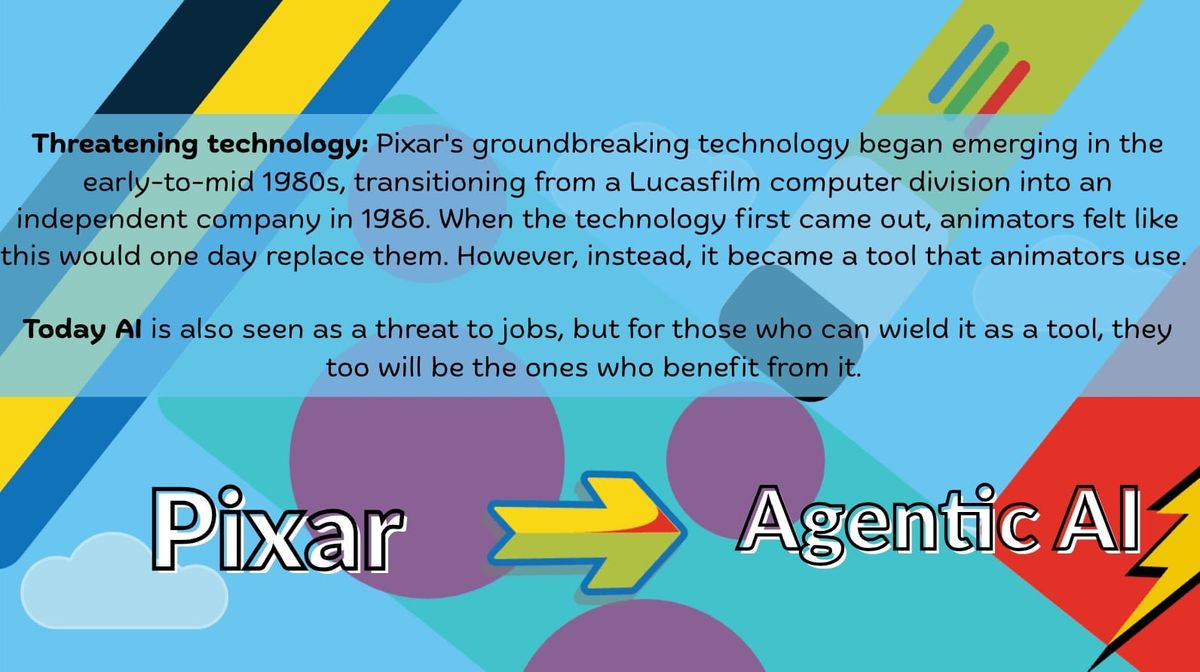
When Pixar first began pushing the boundaries of computer-generated animation, it didn’t just introduce a new tool—it sparked a quiet panic across the animation world. For decades, animation had been the domain of hand-drawn artists, people who spent countless hours sketching frame by frame, bringing characters to life with pencils, ink, and an extraordinary amount of patience. So when computers entered the scene, many feared the worst: that technology would replace the human touch entirely.
That fear wasn’t unfounded. Early breakthroughs like Toy Story—the first fully computer-animated feature film—felt like a seismic shift. Suddenly, animation didn’t require stacks of paper or paint; it required code, rendering engines, and digital models. To traditional artists, it looked like the craft they had dedicated their lives to was being automated out of existence.
But that’s not what happened.
Instead of replacing artists, computer animation expanded what artists could do. The technology didn’t eliminate creativity—it demanded even more of it. Behind every 3D model is still an artist shaping form, color, and movement. Behind every rendered scene is a team making decisions about lighting, composition, emotion, and storytelling. The medium changed, but the core skill—the ability to create something meaningful and visually compelling—remained deeply human.
In fact, many of the same artists who once feared the shift adapted and thrived. They learned new tools, applied their foundational skills in new ways, and helped define an entirely new era of animation. Today’s films blend disciplines: traditional drawing informs character design, while digital tools bring those designs to life with depth, motion, and realism that would have been impossible before.
Rather than replacing jobs, Pixar’s technology reshaped them. It created new roles—modelers, riggers, technical directors—while elevating the importance of artistic vision. The result? Movies and shows that are richer, more immersive, and more ambitious than ever before.
The story of Pixar isn’t really about technology taking over. It’s about what happens when artists embrace new tools instead of resisting them. The pencil didn’t disappear—it just evolved into something far more powerful.
Across industries, AI is already acting less like a replacement and more like an assistant that handles the repetitive, time-consuming layers of work. In software, it can suggest code and catch bugs so developers spend more time designing better systems. In healthcare, it can sift through massive datasets to highlight patterns, allowing doctors to focus more on patient care. In creative fields, it can generate drafts, concepts, or variations—freeing creators to refine, direct, and elevate the final result.
That shift matters. The real value of most jobs isn’t in the mechanical steps—it’s in judgment, taste, empathy, and decision-making. AI can accelerate the steps, but it still relies on humans to guide outcomes, ask the right questions, and decide what “good” looks like. Just like animation didn’t stop needing artists, AI doesn’t eliminate the need for human insight—it raises the bar for how that insight is applied.
History suggests that when powerful tools emerge, the people who benefit most aren’t the ones who resist them, but the ones who learn how to use them well. The artists who embraced digital animation didn’t lose their craft—they expanded it. The same is likely true here. Learning how to collaborate with AI—how to prompt it, critique it, and build on top of it—becomes a new layer of professional skill.
That doesn’t mean every transition is smooth. Some roles will change, and some tasks will disappear. But new roles will emerge alongside them, just as they did in animation: people who understand both the domain and the technology will be the ones shaping what comes next.
AI, at its best, is not a replacement for human ability—it’s a tool that amplifies it. The opportunity isn’t just to work faster, but to think bigger, experiment more, and focus energy on the parts of work that truly matter. Like the shift sparked by Pixar decades ago, this is less about losing what came before and more about building something better on top of it.