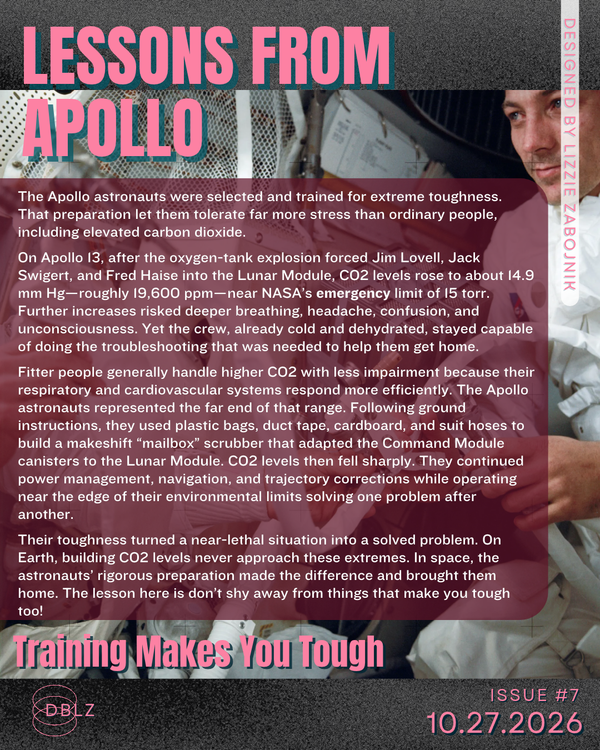
Inspiration 8 | The Power of True Collaboration
Full article: My Most Fulfilling Chapter in Tech
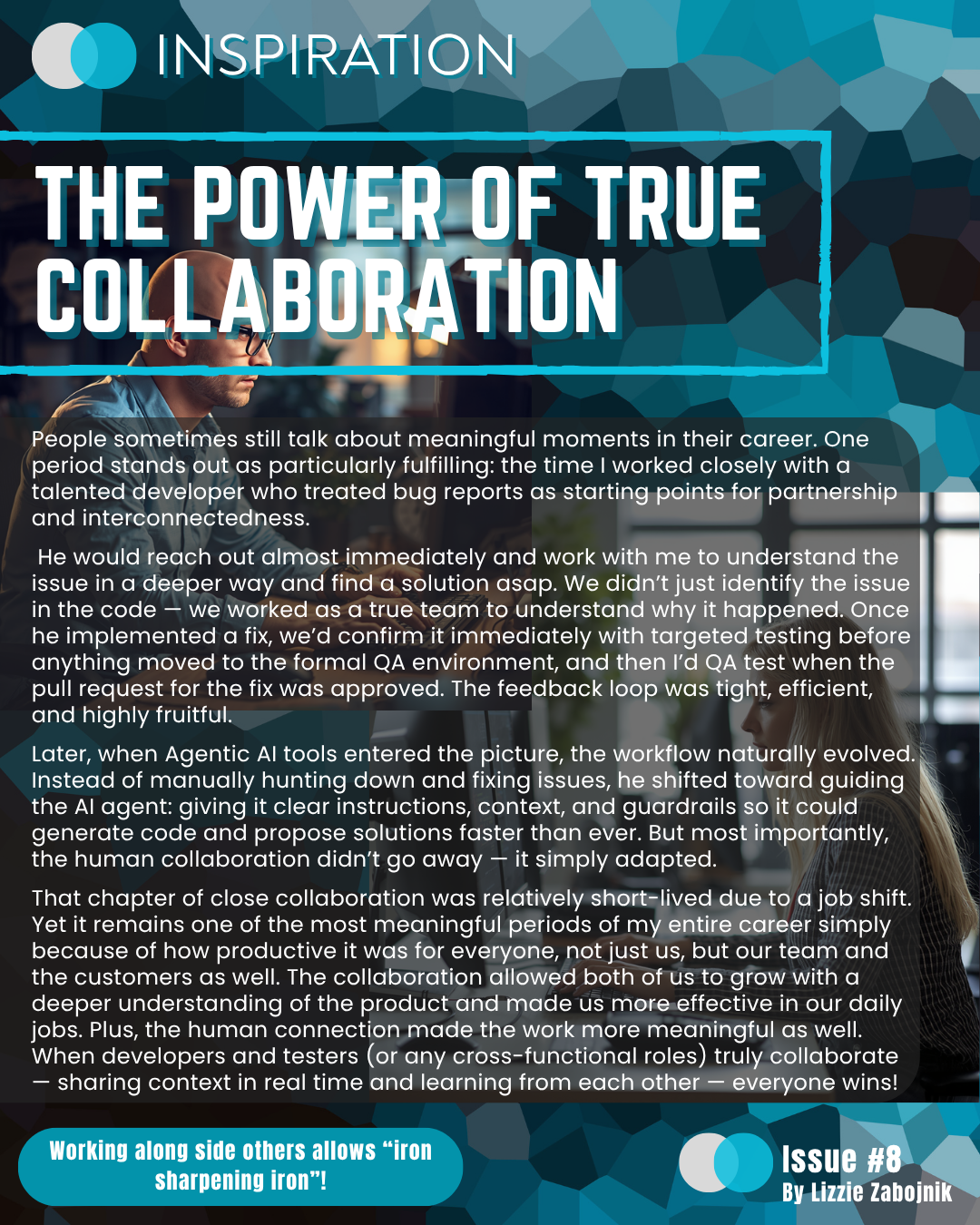
People sometimes still talk about meaningful moments in their career. Well, in a career spanning software testing, customer service, quality assurance, and product improvement, some of the most rewarding moments come not from individual achievements but from genuine teamwork. One period stands out as particularly fulfilling: the time I worked closely with a talented developer who treated bug reports as starting points for partnership and interconnectedness.
From the beginning, our collaboration felt different. Instead of the usual cycle where I’d file a detailed bug report and wait hours or longer for an update, he would reach out almost immediately. “Hey, can you walk me through this scenario again?” or “What exactly were you doing when it broke?” These quick check-ins brought clarity and prevented misunderstandings that often waste time in the development troubleshooting process.
Even better, he invited me directly into his developer environment. I’d test the latest build right there on his machine, provide instant feedback, and together we’d hunt down the root cause. We didn’t just identify the issue in the code — we worked as a true team to understand why it happened. Once he implemented a fix, we’d confirm it immediately with targeted testing before anything moved to the formal QA environment. Then later, once the pull request for the fix was approved and pushed to the QA environment, I tested in QA. The feedback loop was tight, efficient, and highly fruitful. The same was true whenever he was tasked with updating an existing or creating a new integration for our company's product (I'm the integration specialist on the team). He allowed me an early look, early feedback based on how I knew the customer would use or perceive it, and implement those suggestions so that together we provided a great experience for the customer.
How Real-Time Knowledge Sharing Shortened the Path to Resolution
What made this process immensely rewarding was the mutual learning that happened in real time. As we sat together (virtually) tackling each bug or new UX design project, he would explain how the backend logic worked — the data flows, the API calls, the edge cases the system needed to handle. In return, I could show him exactly how the frontend behaved and, more importantly, how our customers actually used the software in the real world.
These conversations eliminated the usual gaps between “development” and “the people who use the product.” Every issue we resolved became a mini masterclass. We both walked away with a much deeper, holistic understanding of the entire application. He became better at anticipating frontend and user-experience implications. I became far more effective at troubleshooting and reporting because I understood the backend constraints and design decisions.
The road to resolution felt dramatically shorter. Instead of back-and-forth spanning larger time frames, we often closed issues in hours — with higher confidence and better overall quality.
The Agentic AI Era: Collaboration Evolves, Doesn’t Disappear
Later, when Agentic AI tools entered the picture, the workflow naturally evolved. Instead of manually hunting down and fixing many bugs ourselves, we shifted toward guiding the AI agent: giving it clear instructions, context, and guardrails so it could generate code and propose solutions faster than ever.
Importantly, the human collaboration didn’t go away — it simply adapted. We still worked together to test the builds the agent created. We performed thorough regression testing, validated edge cases, and confirmed fixes before anything reached the QA environment. The AI accelerated the initial heavy lifting, but the partnership between developer and tester remained essential for quality and shared understanding.
Short-Lived but Immensely Fruitful
That chapter of close collaboration was relatively short-lived due to a job shift. Yet it remains one of the most meaningful periods of my entire career simply because of how productive it was for everyone, not just us, but our team and the customers as well.
The velocity of improvements increased. The quality of the software rose. Most importantly, both of us grew significantly in our roles. The company also benefited— faster delivery, fewer production issues, and a stronger feature and "bug" fix releases overall.
This experience reinforced a core belief: technology advances rapidly (whether through better processes or powerful AI tools), but the most powerful multiplier is still human beings choosing to work together with openness, curiosity, and respect. Plus, the human connection made the work for meaningful as well, no matter how difficult the process of finding the "bug" was or later how frustrating the process of getting the AI Agent to stay on course was.
When developers and testers (or any cross-functional roles) truly collaborate — sharing context in real time and learning from each other — everyone wins. That’s the kind of work environment I hope more teams can experience. It's one that I hope to be a part of again soon in the world of QA engineering/testing. It doesn’t just ship better software. It makes the doing the work more fulfilling.
Have you experienced a similar high-trust, collaborative period in your career? If not, is there anything that you can do to turn the tide and start the interconnected revolution at your work place?