Riding Towards to Goal as a Team or Playing Catch Up
Full article
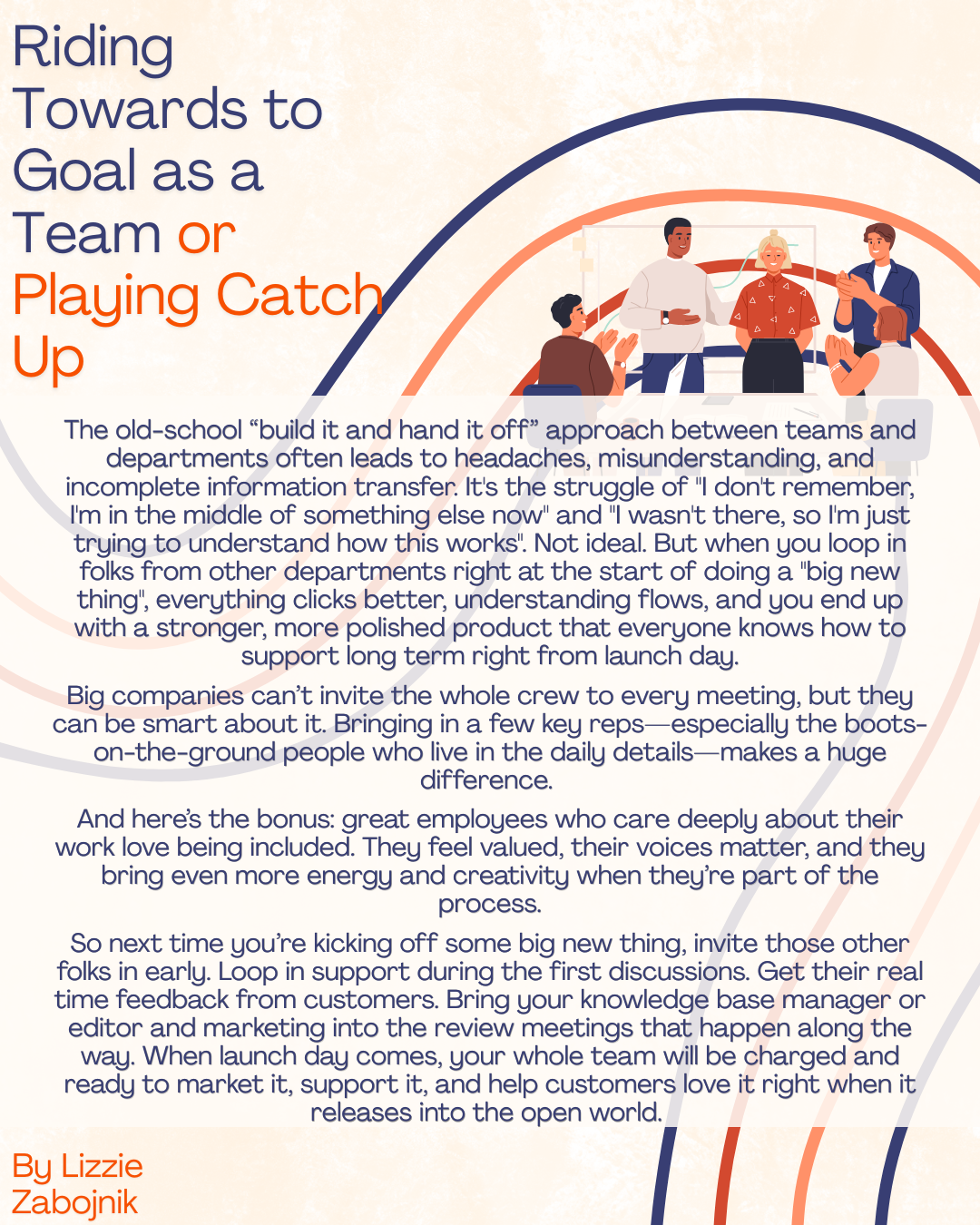
In today’s fast-moving business world, how teams work together when creating something new can turn a good launch into a great one. The old-school “build it and hand it off” approach between teams and departments often leads to headaches, misunderstanding, and incomplete information. But when you loop in folks from other departments right at the start of doing a "big new thing", everything clicks better, understanding flows, and you end up with a stronger, more polished product that everyone knows how to support long term right from launch day.
Why Starting Together Feels So Much Better
Jumping in together early means everyone gets aligned super quickly. You catch issues before they become big problems and uncover cool opportunities no single team would spot alone. Developers bring the tech smarts, support folks flag what customers will actually struggle with, docs writers catch confusing bits, and marketing sees the story that will resonate. It’s like having a bunch of fresh perspectives mixing together to create something truly awesome.
Big companies can’t invite the whole crew to every meeting, but they can be smart about it. Bringing in a few key reps—especially the boots-on-the-ground people who live the daily details—makes a huge difference. Managers give great big-picture guidance, but they’re not in the weeds every day like the frontline team. Including those folks early brings practical, real-world insights that make the final result way better.
The Downside of Waiting Until the End
Now flip it around to the classic hand-off. Other teams get pulled in at the finish line and have to scramble to catch up. They’re coming in cold, asking basic questions while the original team is already itching to move on to the next big thing or they have already moved on.
That creates unnecessary tension. The builders end up spending time explaining stuff they’ve already lived and breathed. Knowledge transfer gets bumpy, things fall through the cracks, and everyone feels a bit frustrated. It's the struggle of "I don't remember, I'm in the middle of something else now" and "I wasn't there, so I'm just trying to understand how this works". Not ideal.
Real-Life Wins (and Lessons)
I’ve experienced both sides, and the difference is night and day.
One time, I got pulled in early on a new customer integration I’d eventually be supporting on the support desk. Because I was there from the start, I could ask all the clarifying, deep-dive questions along the way. When it inevitably broke (because everything breaks at some point), I had a solid understanding of how everything fit together and could troubleshoot each step correctly and smoothly. As the editor of our knowledge base articles, I also nailed carefully piecing together the docs together—clear steps for customers and the right technical details for support. Win-win!
When I wasn’t involved early, it was a different story. I’d end up chasing down pieces from multiple people, trying to solve a puzzle with missing bits. A quick hand-off meeting and a solid doc (even those slick ones AI helps create now) help, but they never cover everything. Meetings have limits on how much you can absorb, and docs (agent made or not) can miss nuances and miss explain. The chase to nail down all the details interrupts everyone and just takes longer. Plus if you have ever tried getting information out of someone who has already moved onto the project, you know it's like talking to a teenager when they are scrolling Instagram. They answer you but their mind is somewhere else so the information you get is less informative than you would like.
Bringing Everyone Along for the Ride
The sweet spot? Invite the people who’ll write the docs, answer customer calls, handle IT, do marketing, and more—right from the beginning on big changes. When folks travel the journey together, understanding builds naturally and met with a lot less effort. Your team can quickly transition from creating to testing to supporting live with customers.
What does this looks like, get those people (at least representatives from those other departments or teams...and not just managers because boots on the ground add incredibly value too) in the discovery meetings, the development planning meetings, the QA test review meetings etc. If a process doesn't exist for this, make one and be willing to refine it over time in order to make it better. While many processes at a company draw clear lines of division to keep everyone in line, this is a process that drives interconnectedness.
It does take a bit more upfront effort, especially in bigger teams and organizations. But with markets shifting fast and AI speeding everything up, that investment pays off big time. Staying ahead isn’t easy these days, but proactive collaboration makes it way more doable. Staying ahead as a team is better and more valuable for everyone.
And here’s the bonus: great employees who care deeply about their work love being included. They feel valued, their voices matter, and they bring even more energy and creativity when they’re part of the process.
Bottom Line
Putting in the effort to collaborate early isn’t always the easiest path—but it’s absolutely worth it. You get better products, smoother launches, happier teams, and customers who actually get the full value sooner. The bottom line is, would you rather have other team members or teams playing catch up, trying to chase down information, or would you rather have all teams and departments move towards the goal of releasing and supporting a great product together?
So here’s my challenge to you: next time you’re kicking off some big new thing, invite those other folks in early. Loop in support during the first discussions. Get their real time feedback from customers. Bring your knowledge base manager or editor and marketing into the review meetings that happen along the way. When launch day comes, your whole team will be charged and ready to market it, support it, and help customers love it right when it releases into the open world. While you probably won't do this for every little feature or update, do it for the big ones, the ones you know you will get asked about from customers and the ones you specifically want to use to drive greater adoption.
Early collaboration is a total game-changer. It also makes work more enjoyable and more effective. Give it a try—you’ll see the difference!