Humans Need to Help AI Help Them
Full article
Just like humans, Agentic AI is only as effective as the tools, access, and data you provide. No matter how advanced the model, if it can't see your codebase, it can't debug, suggest improvements, or write meaningful code. If it doesn't have your customer data, usage metrics, or financials, it can't deliver sharp analysis or strategic recommendations. If there are gaps in your metrics tracking, then it can't effectively evaluate those metrics and give concrete advise.
This fundamental truth is becoming more important as Agentic AI moves from novelty to daily business tool.
The Data Foundation Problem
Agentic AI thrives on context. The more relevant, high-quality data it can access, the more value it delivers. We're seeing a major trend across forward-thinking companies: connecting AI agents to everything — Google Workspace, Dropbox, CRMs, support ticketing systems, billing platforms, and internal databases.
This isn't just about convenience. It's about unlocking capabilities like:
- Summarizing every interaction and support ticket for a customer before a renewal call to understand exactly why they might churn
- Generating real-time graphs comparing software usage patterns against support ticket volume
- Analyzing which customers use which products, how much revenue they generate, which features they engage with most, and what enhancements they request
Without rich, structured, complete data, these powerful use cases simply don't work or won't work well.
A Real-World Example: Building a Metrics Baseline
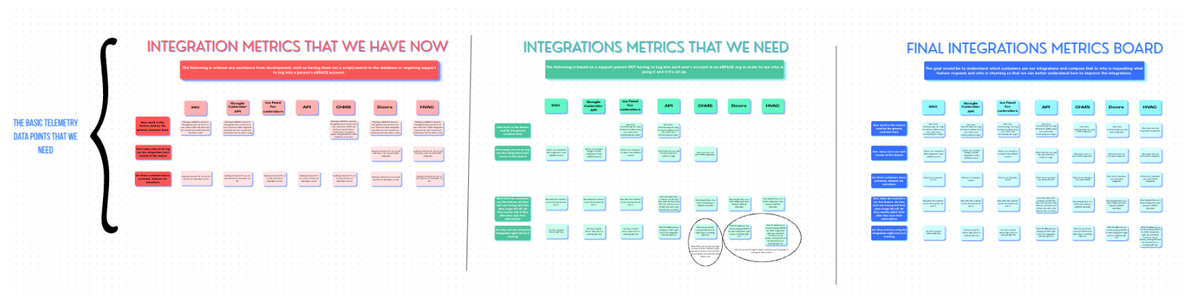
Recently, I built a comprehensive baseline for every key metric we needed to track across our product integrations (see screenshot at top of the article). I organized them into three clear views:
- What we currently have — Existing data sources and metrics
- What we need to start tracking — Gaps that must be filled
- The ideal end state — The complete picture we want the AI to work with
The goal was straightforward: enable our Agentic AI to analyze customer usage patterns, compare it to customer feedback, and most importantly, compare the cost of supporting each integration against the revenue it generates.
Once that baseline exists, the insights flow naturally. You can quickly identify:
- Which subscription tiers use which integrations the most
- Which integrations consume disproportionate development and support resources
- Which ones are truly profitable
- Which integrations, if improved, would drive the highest customer adoption and new sales
The Carpenter Analogy
Think of Agentic AI like a highly skilled carpenter. Give them a full set of sharp, modern tools and quality materials, and they can build something remarkable. Hand them a dull handsaw and a few bent nails, and even the best craftsman will struggle.
Agentic AI isn't magic. It's a powerful multiplier — but only when properly equipped.
Human + AI: The Real Winning Combination
Not only can Agentic AI quickly analyze the data points once you have it, Agentic AI can also help you identify what baseline data you need to track in the first place.
However, it still needs human input. Hard working, smart, inquisitive people will always have a broader context than Agentic AI. You can connect Zoom calls recordings, phone calls, CRM's, customer support tickets etc to Agentic AI, but the people companies hire will typically have a better feel and understanding for what the company needs than AI. The people on the frontlines — in sales, support, product development, and customer success — see nuances that no dataset fully captures. The best results come from combining AI's analytical power with human experience and judgment. Together they can fill in the gaps, access the data, and make a path towards excellence and improvement.
How to Move Forward
As we lean more heavily on Agentic AI, the companies that win will be those that treat data infrastructure as seriously as they treat the AI models themselves.
Practical next steps:
- Audit what data your AI agents can currently access
- Identify your most important decisions and work backwards to the data those decisions need
- Build (or improve) those data pipelines and integrations
- Create clear views and structures that make information easy for AI to consume
Agentic AI represents an incredible leap in productivity. But remember: it doesn't replace the need for good systems and clean data — it amplifies their importance.
Give your AI the right tools and access, combine it with human insight, and you'll unlock its true potential. Shortchange the foundation, and you'll be left with an expensive, underperforming assistant.
The choice is yours. Equip your agents well.